From a borrowed frame to Kapabari
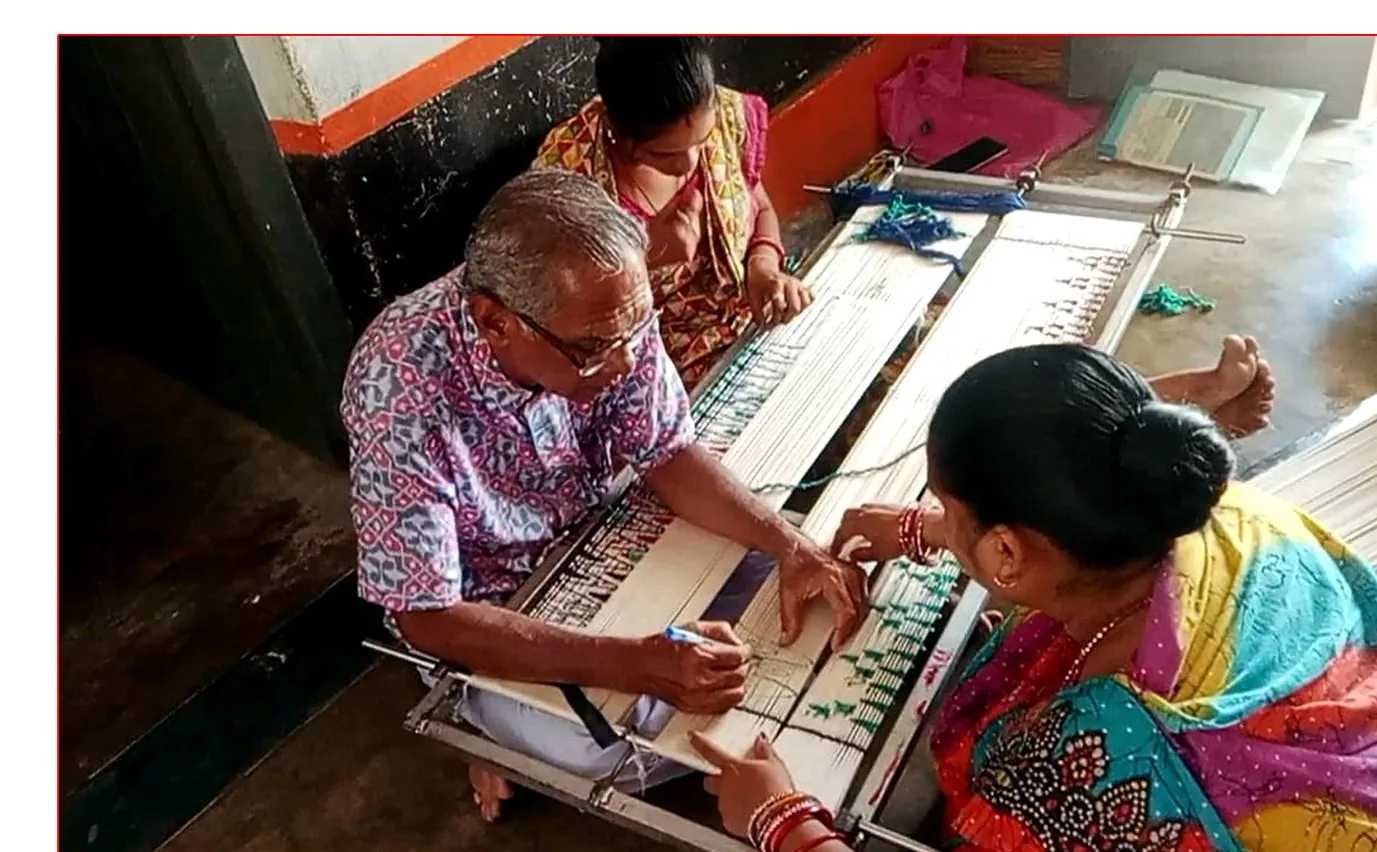
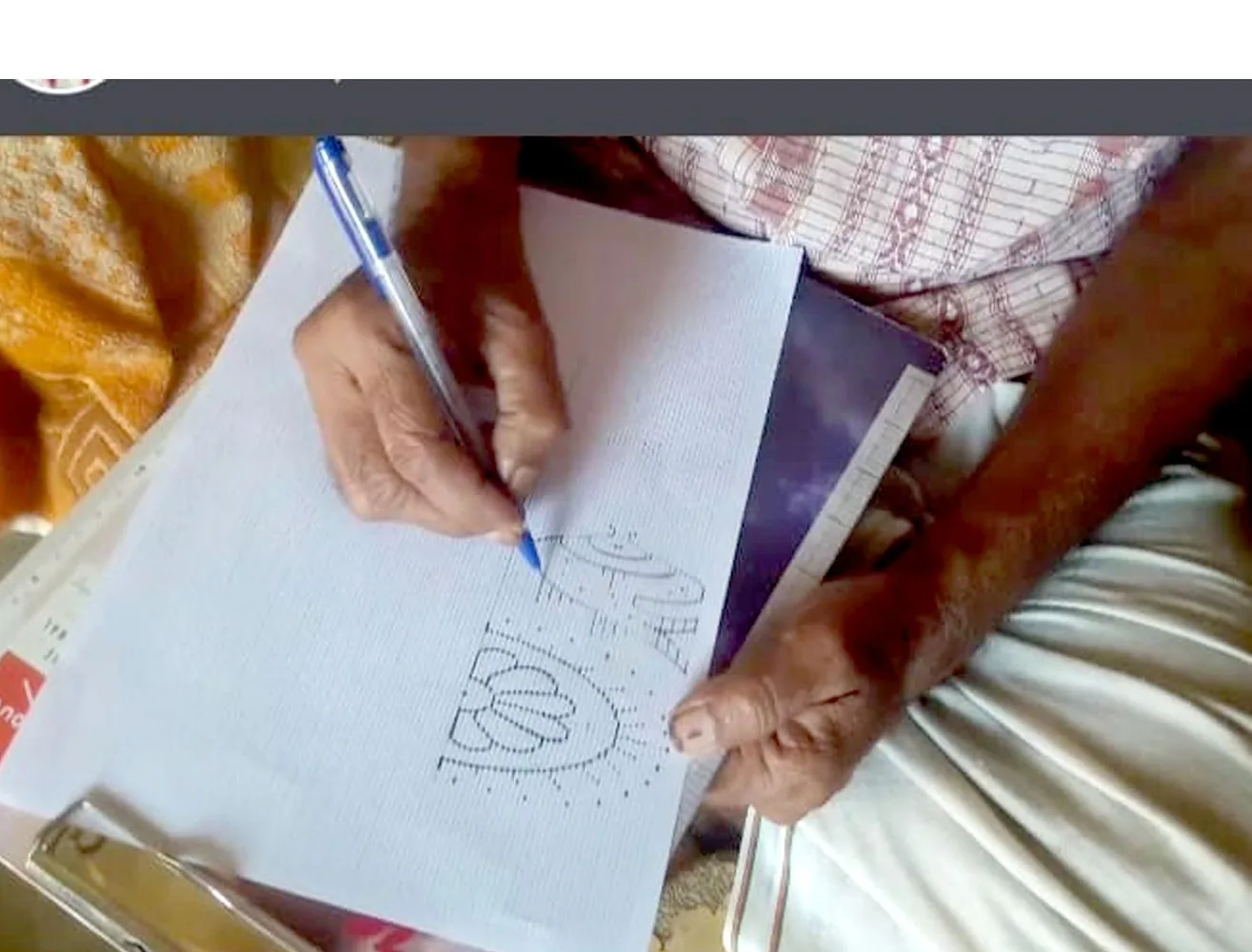
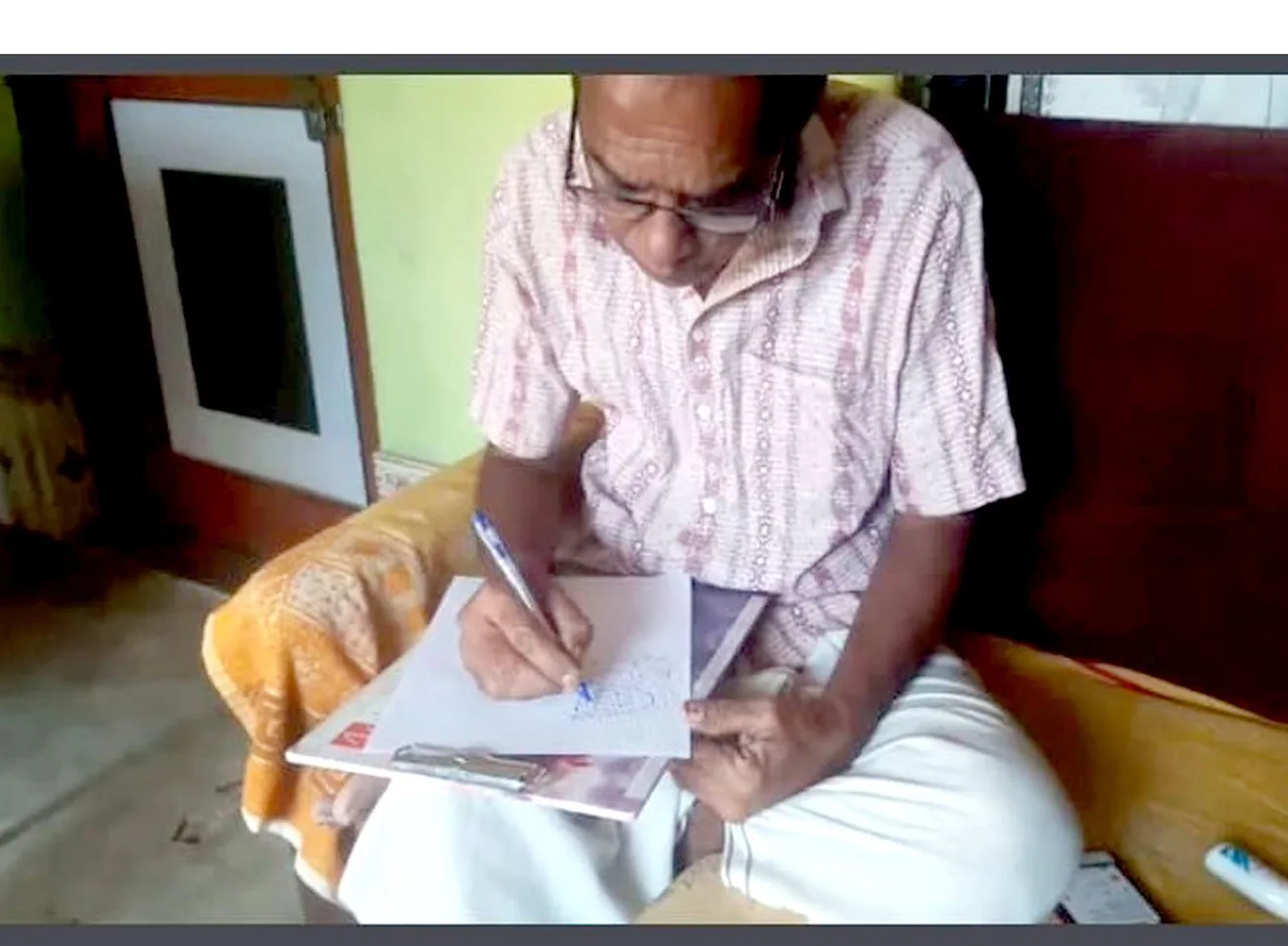
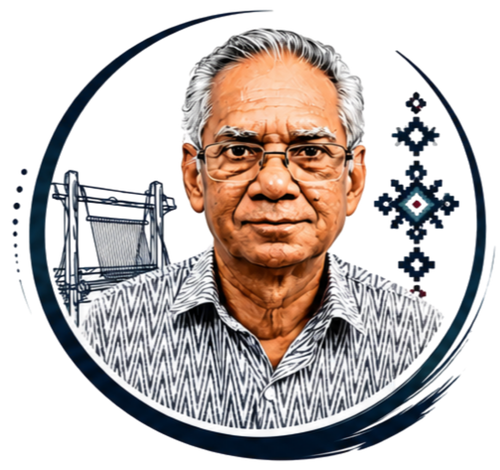
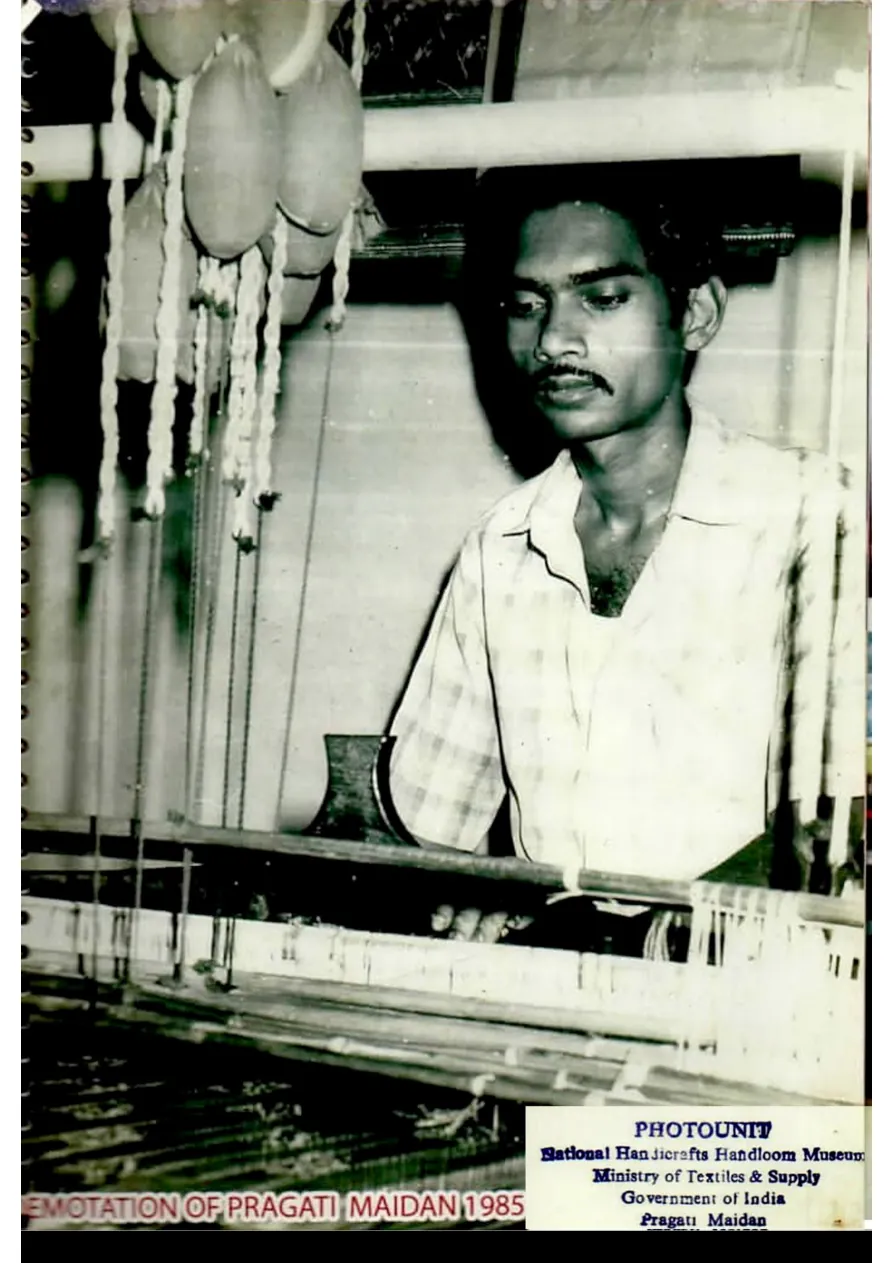
Bhaktaraj Meher first touched the loom beside his father, Tikeswar Meher, in class three — a child of eight. After his tenth examination he left school for the yarn. Studies still pulled him; poverty closed the door. Rice had risen from two and a half rupees a kilo to three. The family had no mud house of their own in which to set a tanta. Neighbours lent a roof. He worked three hours after school so the drawings could pay for the next day’s food.
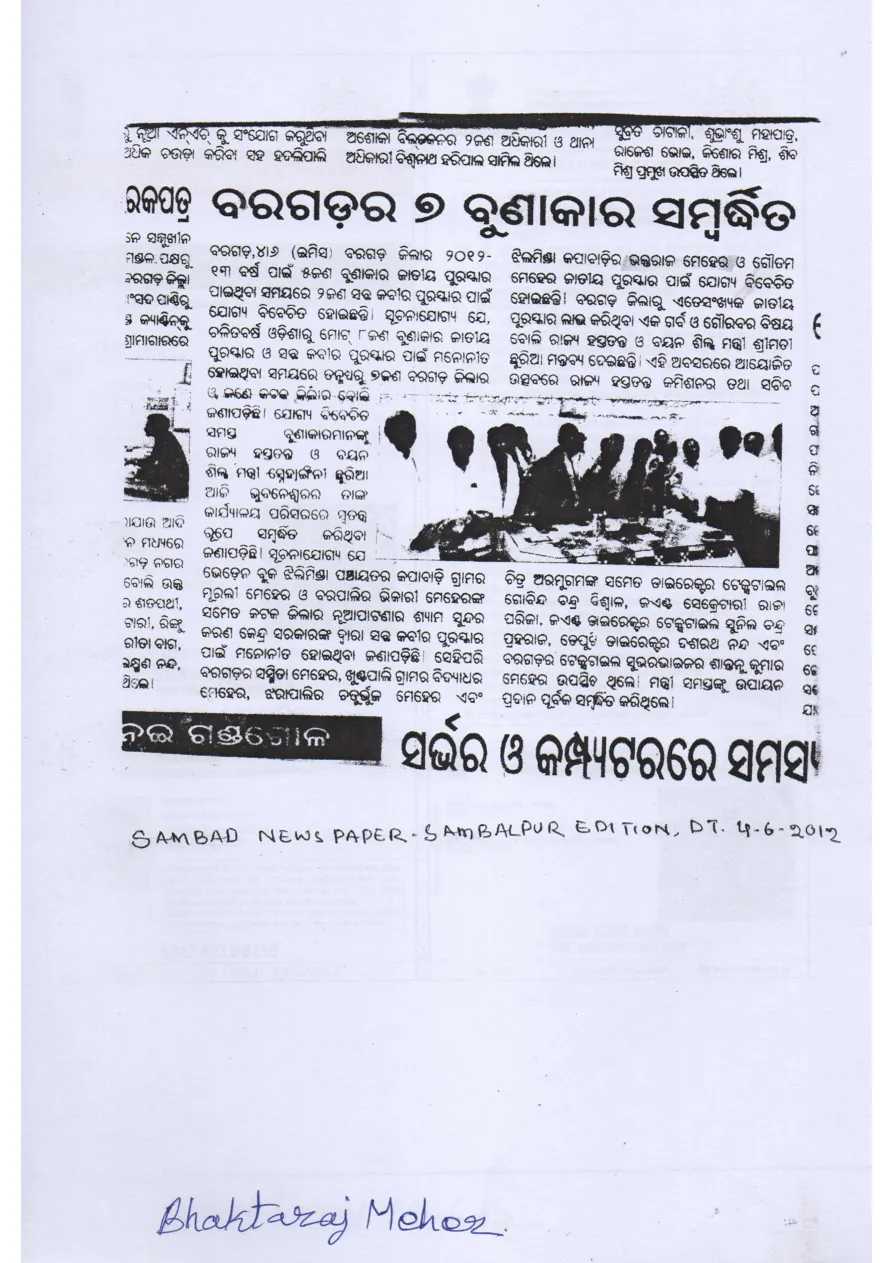
Those drawings were taken up by Sambalpuri Bastralaya and the Sambalpuri Handloom Stores — the co-operative that first carried Bargarh Bandha into the market. His father insisted the sketches become Bandha. Production officer Sashidhar Meher, himself a Sant Kabir Awardee, still records that early work in a letter of record.
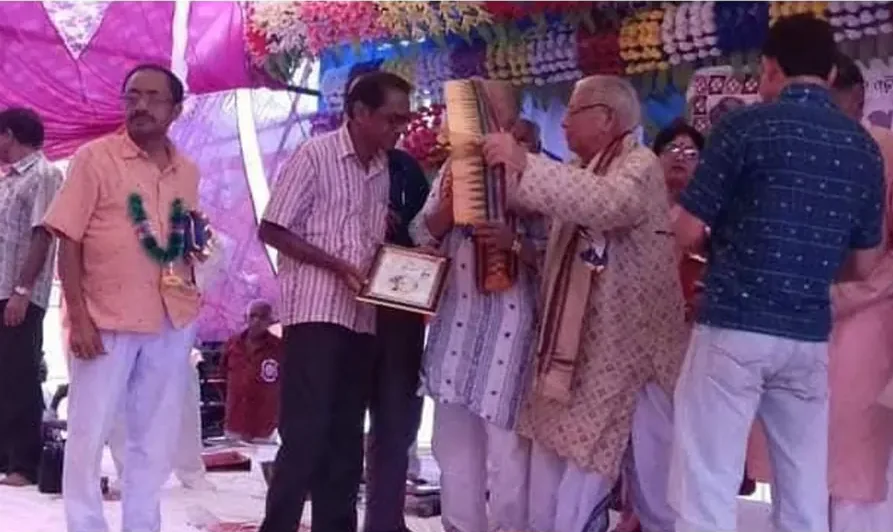
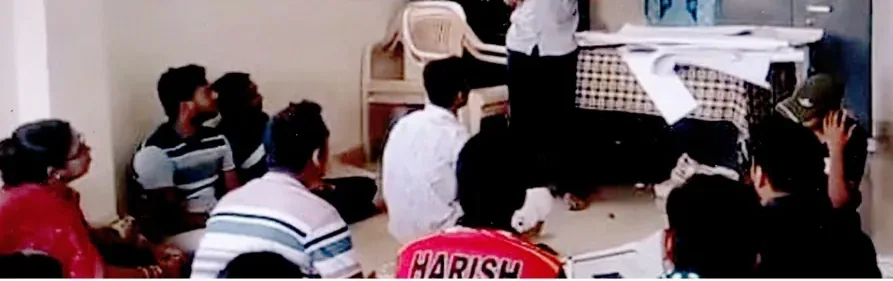
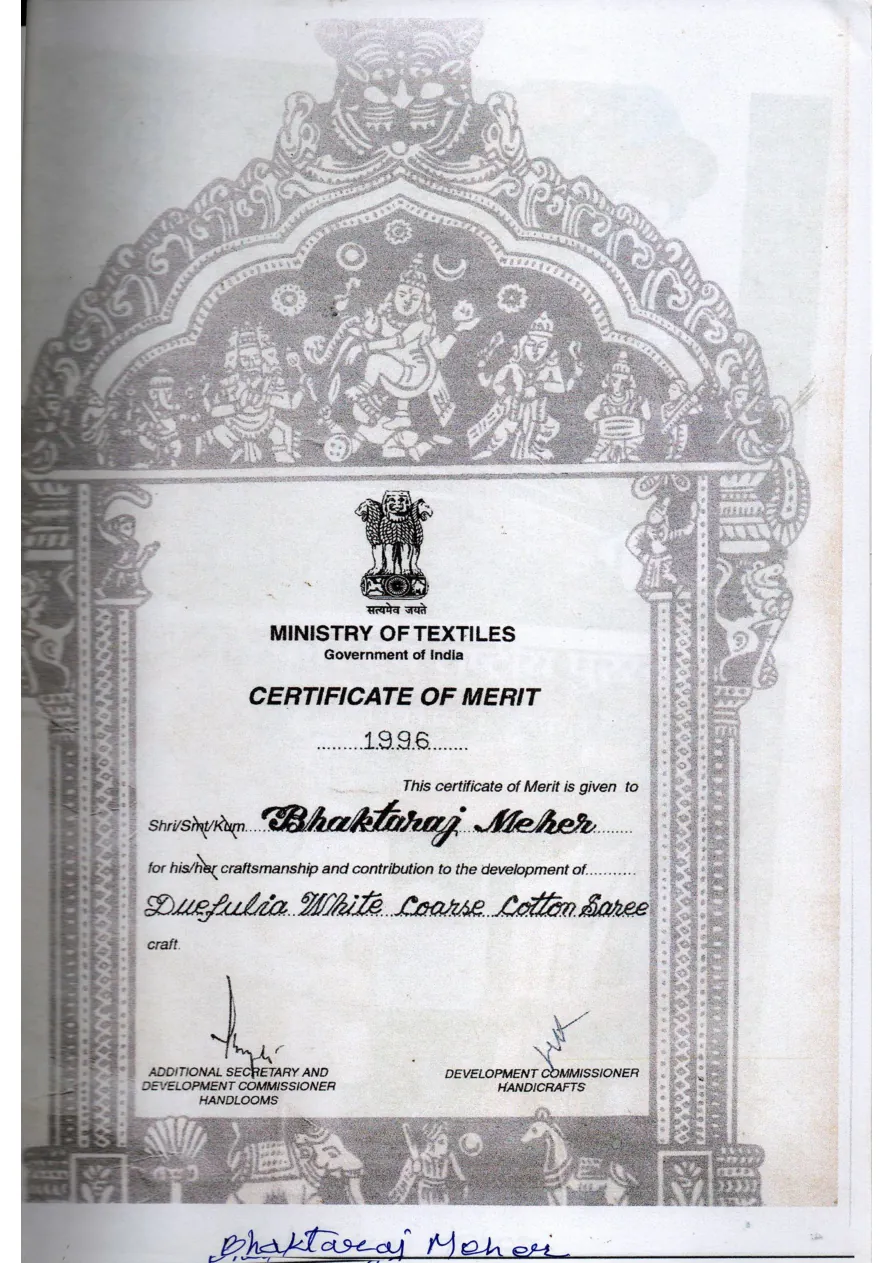
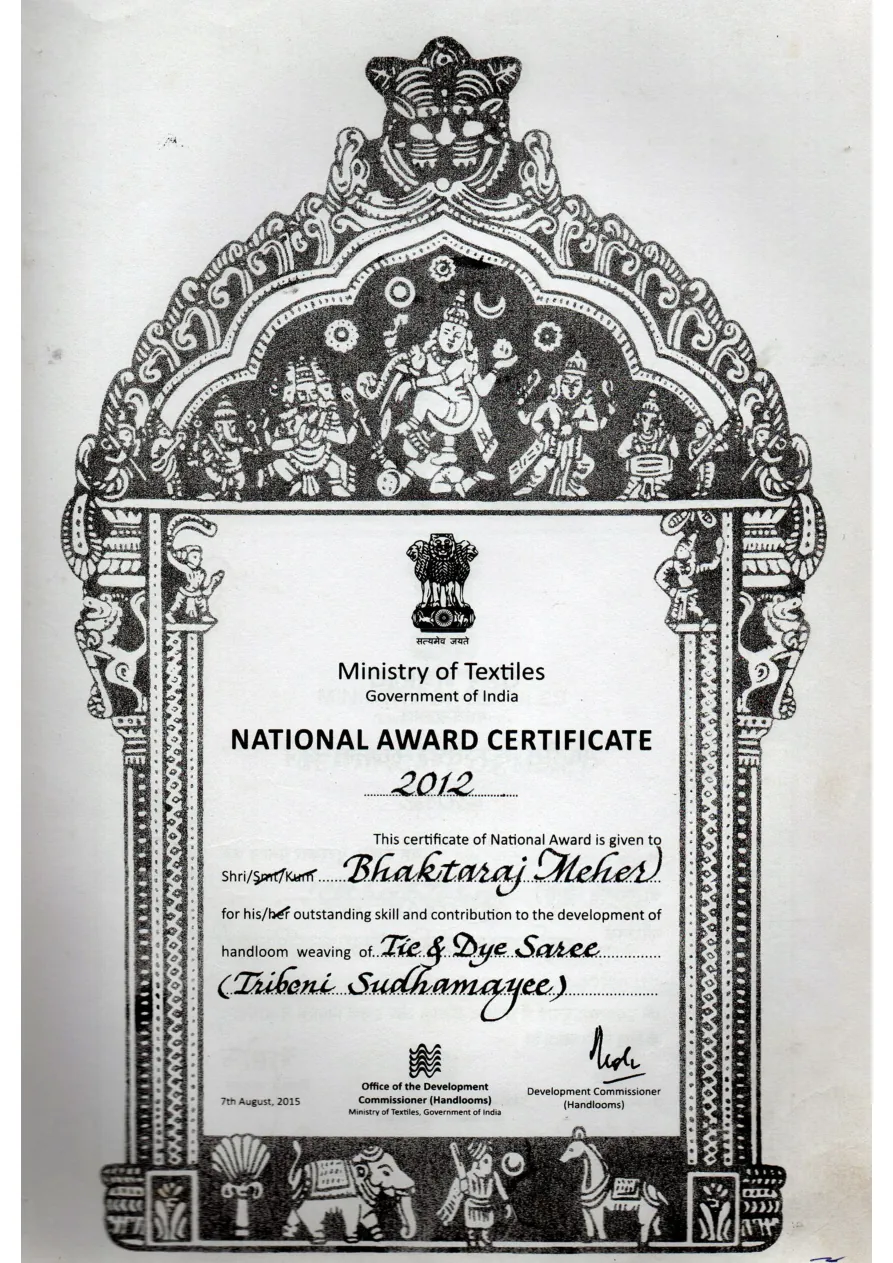
National Merit in 1996, for the Dui Fulia cotton saree, brought invitations to train boys and girls across districts. Students who could not pay sat in the same small house and learned for nothing. Five of them later received the National Award. They were the ones who pushed him to submit a cloth of his own. In 2012 the Ministry of Textiles named that cloth: Tribeni Sudhamayee.
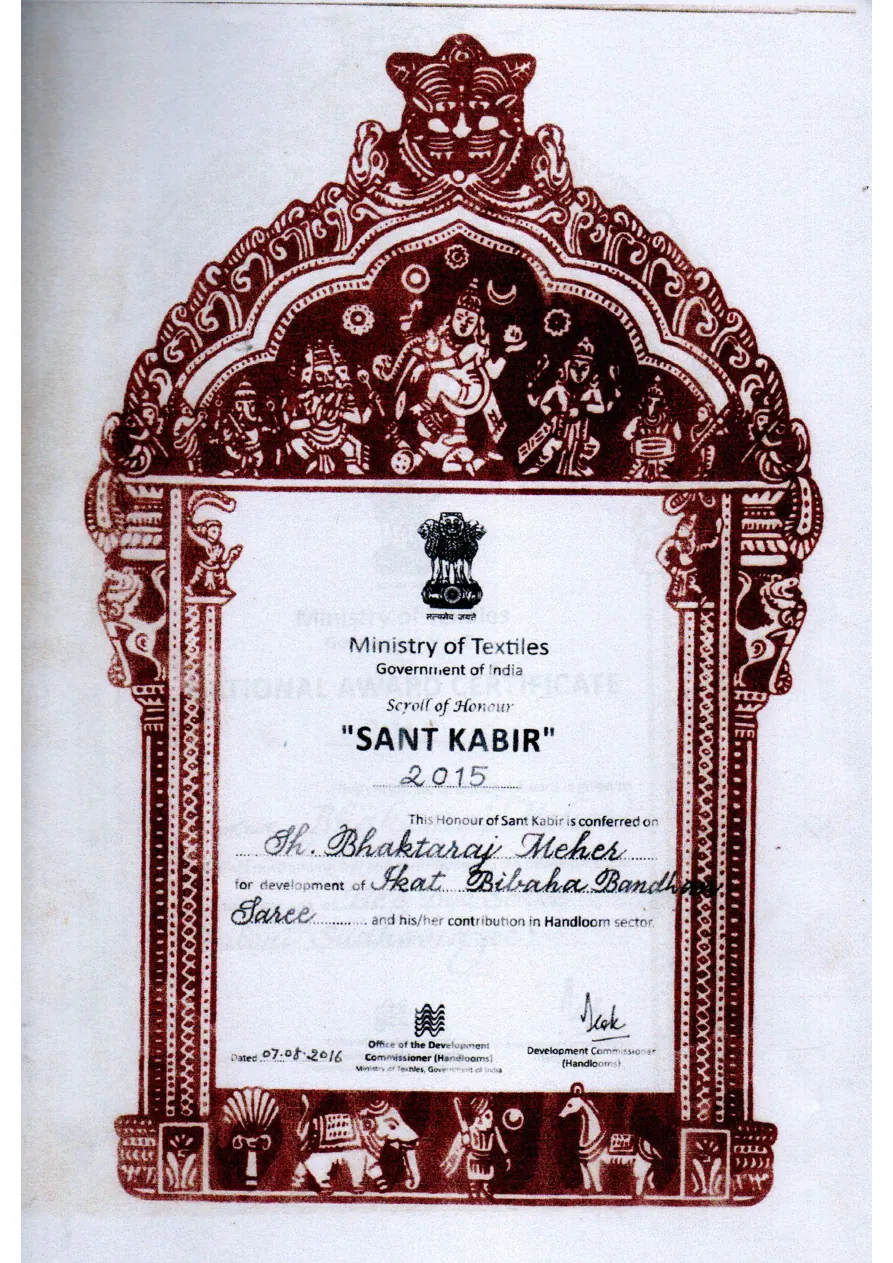
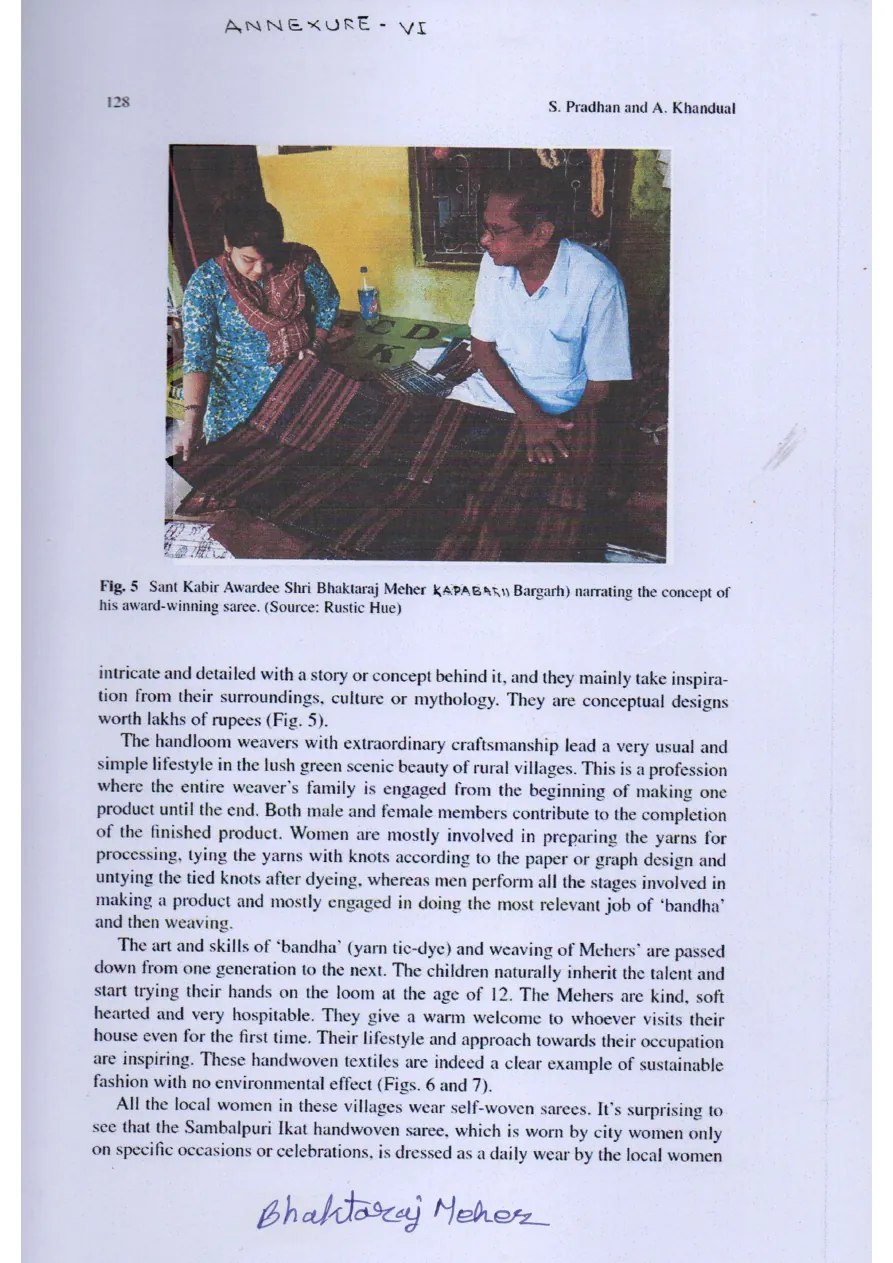
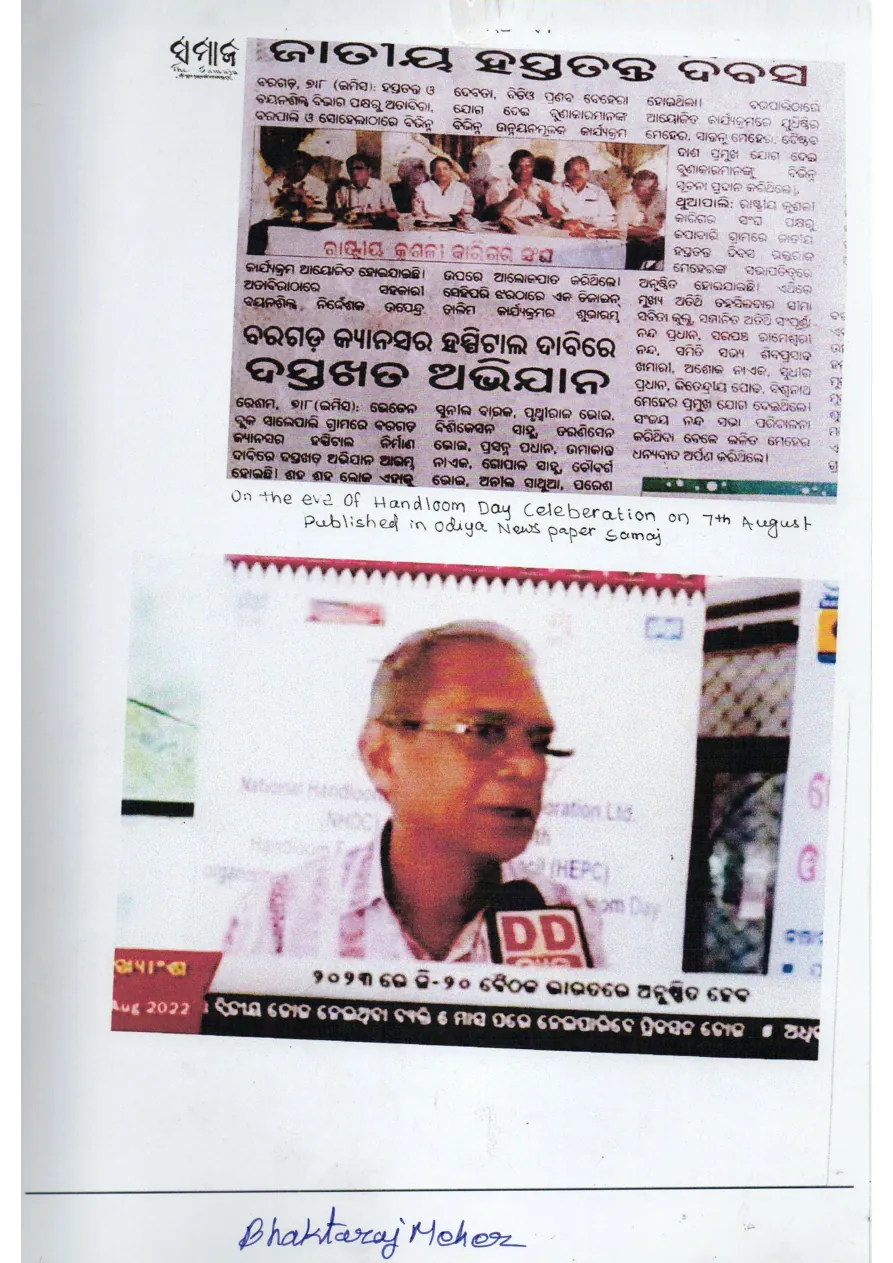
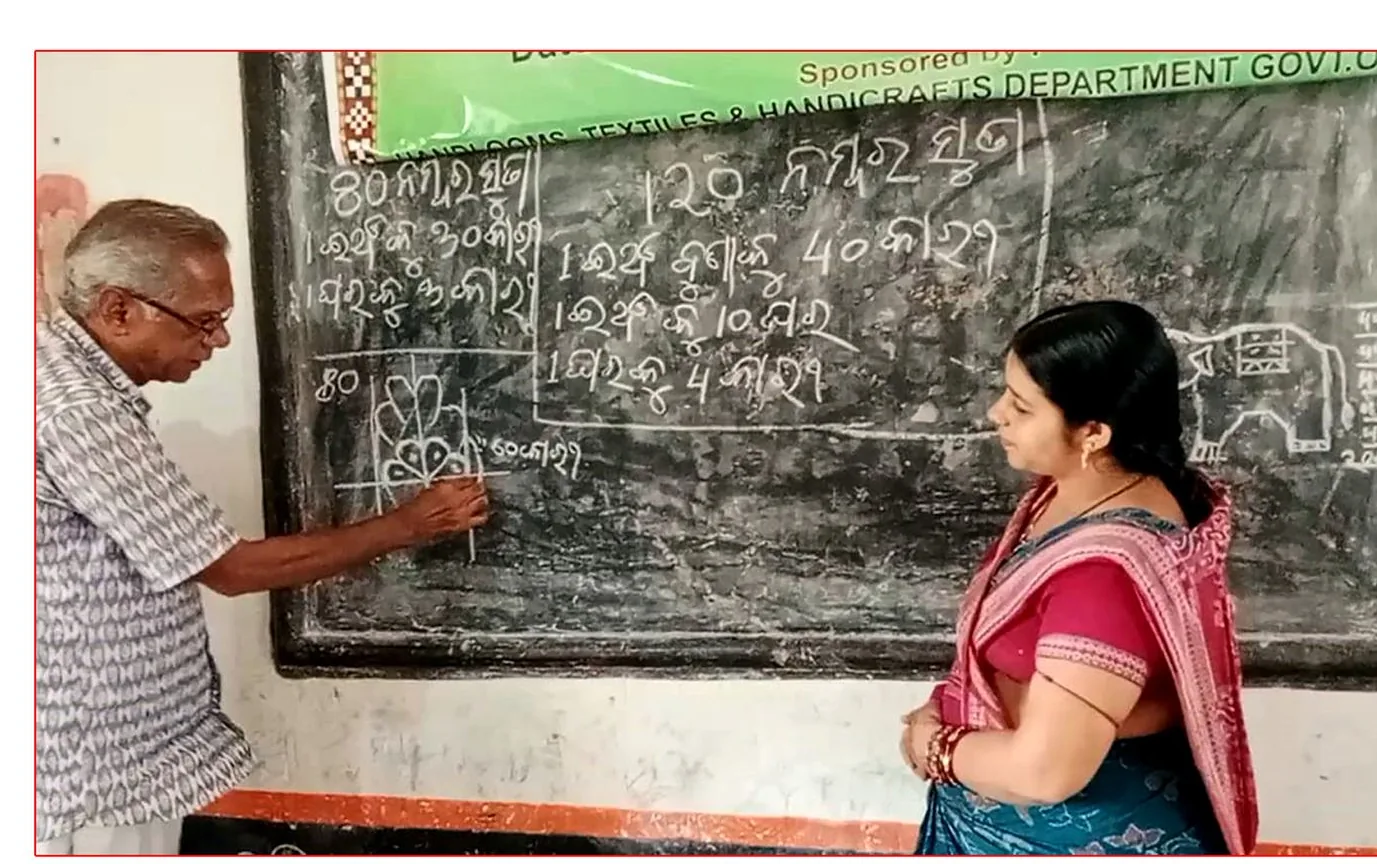
Padma Shri Chaturbhuj Meher had already accepted him as a shishya, then sent him to Vishwakarma Weaving Samiti to train five to six hundred women between 2004 and 2014. Sant Kabir followed in 2015 for Bibaha Bandhana — two souls bound, as marriage binds. A Springer Nature chapter later carried the work to readers beyond Odisha. He still lectures, still hosts study tours, still walks the villages around Bargarh so the next generation has a path. Jay Jagannath.
Jay Jagannath.